
Active Recall Beats Re-Reading: What the Research Actually Says
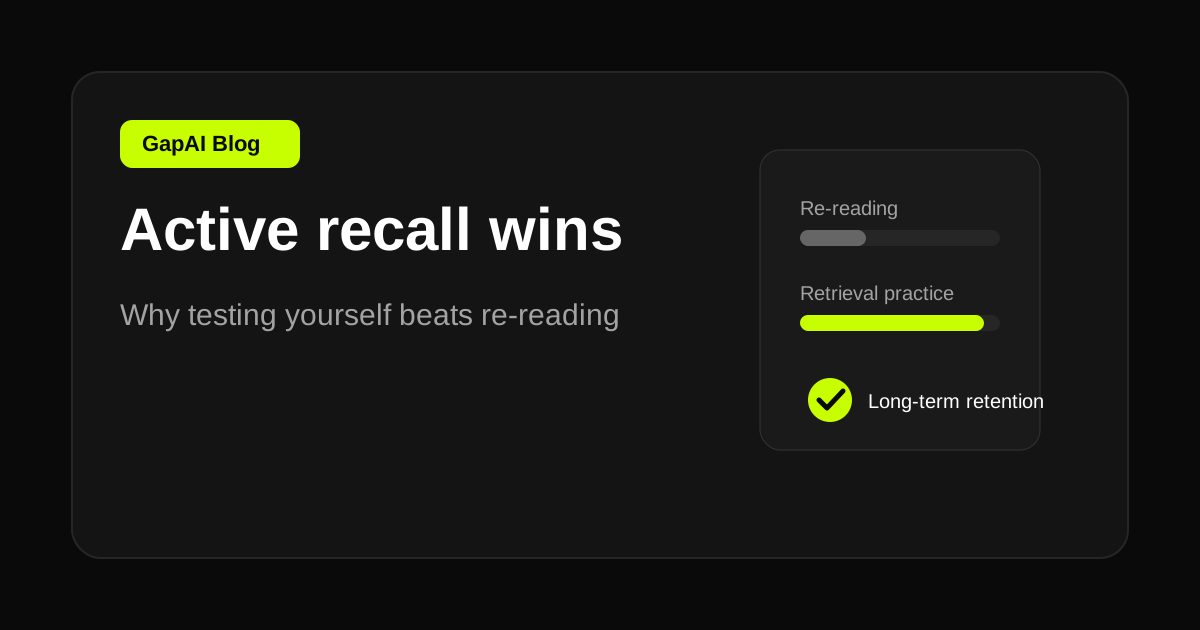
Re-reading and highlighting feel productive but rank among the least effective study methods. Here is the evidence behind retrieval practice, and how to use it before your next exam.
Key ideas
The comfortable illusion of re-reading
Re-reading feels good. The second pass through a chapter flows faster, the ideas feel familiar, and that familiarity gets mistaken for knowledge. Psychologists call this the fluency illusion: recognising material is not the same as being able to produce it in an exam hall with a blank page in front of you.
In a landmark review of ten popular study techniques, Dunlosky and colleagues rated re-reading and highlighting as low-utility methods. They are not useless. They are simply outperformed, badly, by methods that force your brain to do the retrieval work.
What the testing effect shows
In Roediger and Karpicke's well-known experiments, students who tested themselves on a passage retained far more a week later than students who spent the same time repeatedly studying it. The act of pulling information out of memory strengthens it in a way that pushing it back in does not.
This is the testing effect, and it is one of the most replicated findings in learning science. Every retrieval attempt, even a failed one followed by feedback, builds stronger, more durable memory than another passive pass through your notes.
Why most students still don't do it
Retrieval practice has a friction problem. Writing good questions for yourself takes time, and it is hard to test yourself on material you half-know, because you tend to write questions about what you already remember. Generic quiz banks solve the effort problem but create a worse one: they test someone else's syllabus, not the notes your lecturer actually gave you.
The other missing piece is honest marking. Checking your own answer against the textbook invites generosity: 'close enough' becomes a habit, and the illusion of knowing survives. Real retrieval practice needs questions from your material and marking that does not flatter you.
How to apply this before your next exam
Close the book before you check. After reading a section, write or say everything you remember, then compare against the source. The gap between what you produced and what is on the page is your actual to-do list.
Space it out: three short retrieval sessions across a week beat one long session the night before. And grade yourself against command words: if the question says 'explain', a list of facts is not a pass, no matter how correct the facts are.
Where GapAI fits
GapAI removes the friction from doing this properly. Upload your lecture notes or PDF, and it generates retrieval practice from your material, with every question grounded in a passage from your own document. Each topic becomes a staged path that moves from recall to application to a final mastery check.
The marking is deliberately honest: command-word aware, resistant to keyword-stuffing, and structured to tell you exactly what was present, what was missing, and what to do next time. That is retrieval practice with the two ingredients research says matter most: your material, and feedback you can trust.