
Cramming vs Spaced Practice: What You Keep After the Exam
Cramming can pass a test and still leave you with nothing a month later. The spacing effect explains why, and a realistic spaced plan takes less time than you think.
Key ideas
What cramming actually buys you
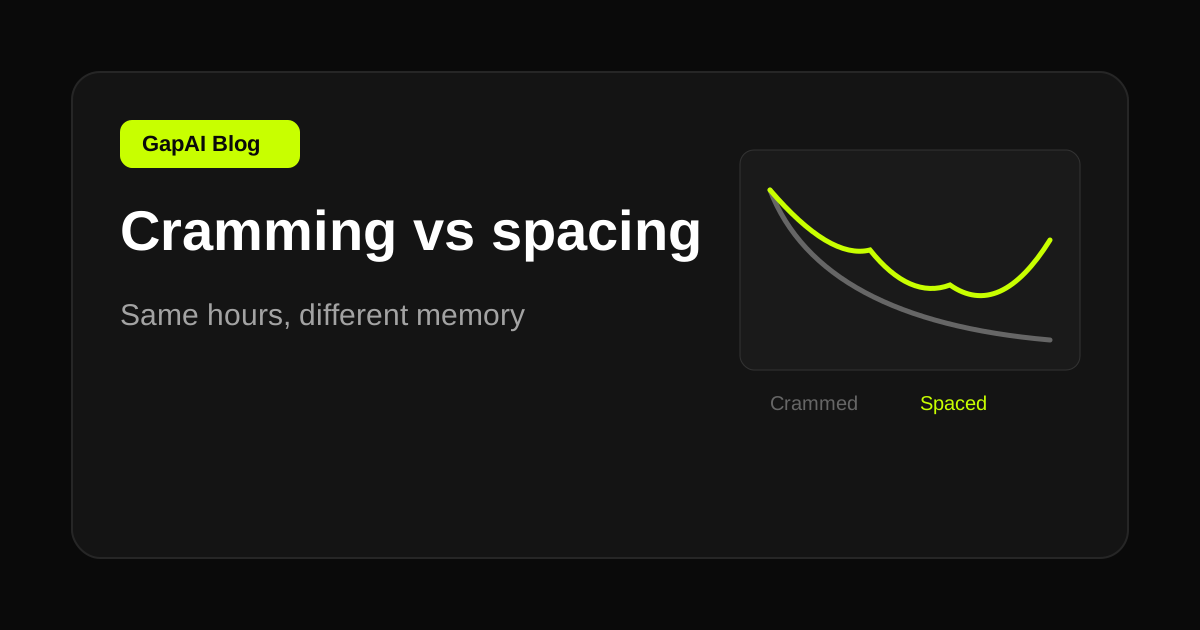
Cramming is not useless. Packing study into the night before genuinely can lift tomorrow's performance, which is exactly why the habit survives. The problem is what happens next: the forgetting curve after massed practice is brutal.
If the module is cumulative, or the exam is weeks away, or you will ever need the material again, cramming is a loan with high interest. You perform briefly and then hand most of it back.
The spacing effect
In a meta-analysis covering hundreds of comparisons, Cepeda and colleagues found that distributed practice reliably beats massed practice for retention. Same total study time, different arrangement, dramatically different results weeks later.
The effect is one of the oldest and most replicated findings in the science of learning. Each spaced revisit catches the memory just as it starts to fade, and the act of pulling it back strengthens it beyond where it was.
Why spacing feels worse but works better
During a cramming session, everything stays warm and answers come easily, so it feels like winning. During spaced review, you have started to forget, retrieval is effortful, and it feels like losing ground.
Robert Bjork calls these desirable difficulties: conditions that lower performance during practice while raising it on the test that matters. The struggle to retrieve a fading memory is not a sign the method is failing. It is the mechanism.
A realistic spaced plan for a busy term
You do not need an elaborate system. Study a topic once, revisit it briefly two or three days later, then again after a week, then after a few weeks. Each revisit is a short retrieval session, not a full re-study.
Twenty minutes of closed-book questions on last week's topic does more for exam day than another hour of re-reading tonight's. The hard part is not the time. It is trusting a method that feels slower while it is working.
Where GapAI fits
GapAI structures this for you. Topics run as staged paths, and mastered topics come back for spaced review after a few days, timed to catch the fade rather than the comfort.
Because every revisit is retrieval with honest marking rather than a re-read, the time you spend is the kind the research actually rewards.