The Illusion of Knowing: Why You Blank in Exams on Topics You Studied
You read the chapter, it felt familiar, and then the exam asked and nothing came out. Here is the psychology behind the illusion of knowing, and how to study so it cannot fool you.
Key ideas
The feeling of knowing is a bad witness
Every student knows the moment: the page looks familiar, the diagram makes sense, the summary reads smoothly. It feels like knowledge. Then the exam asks the same idea from a slightly different angle and the answer is not there.
Psychologists call this an illusion of competence. Koriat and Bjork showed that learners systematically overestimate what they will remember, because the judgment is made while the answer is sitting in front of them. With the book open, everything feels known.
Where the illusion comes from
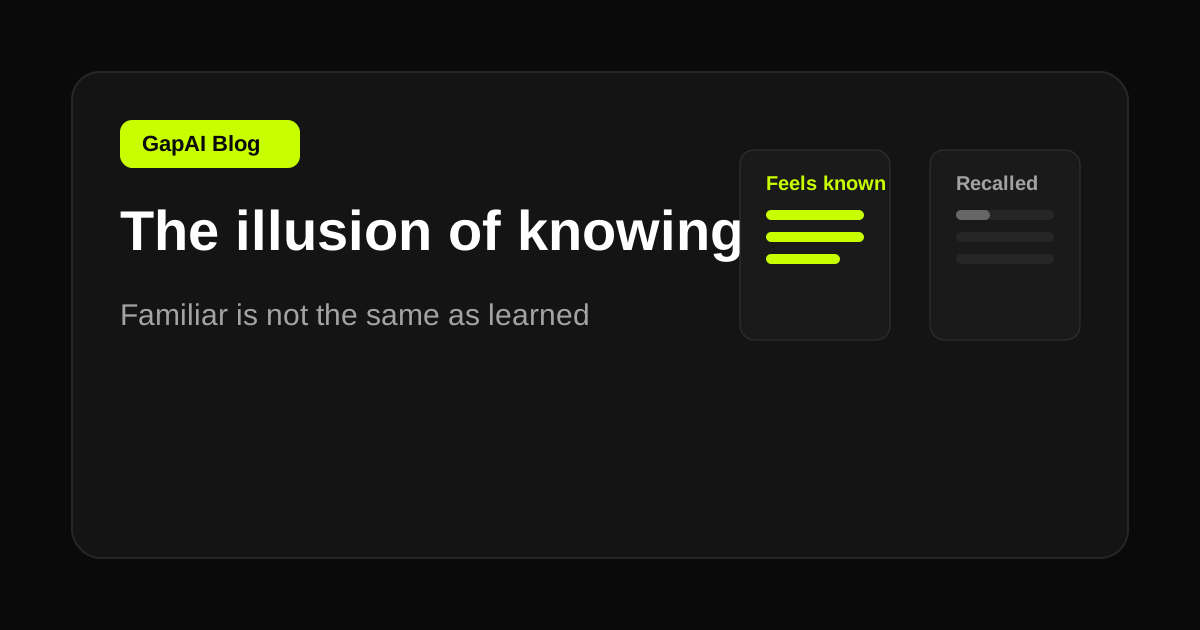
The brain confuses ease of processing with strength of memory. A second read flows faster than the first, and that fluency gets misread as learning. But fluency lives in the moment; recall has to survive until exam day.
Recognition and recall are different operations. Recognition asks whether something looks familiar. Recall asks you to rebuild it from nothing. Revision methods built on recognition, like re-reading and highlighting, train the wrong operation for the test you will actually sit.
Why school habits keep it alive
Re-reading feels productive, goes quickly, and never delivers the small sting of a failed retrieval attempt. Self-quizzing is slower, effortful, and regularly embarrassing. Given the choice, most people drift toward the method that feels better and works worse.
Self-checking makes it worse. When you mark your own answer against the textbook, close enough becomes a pass. The illusion survives because the checking step is negotiable.
How to break it
Close the source before you answer. Retrieval with the book shut is the only honest measure of what you own. If you cannot produce it now, in comfort, you will not produce it under time pressure.
Then make the checking non-negotiable: compare against the actual marking points, count what was genuinely present, and record what was missing. The goal is a study loop where confidence can only come from evidence.
Where GapAI fits
GapAI is built to make the honest loop the default. It generates questions from your uploaded material, asks them with the source closed, and marks the answers like an examiner: what you did well, what was genuinely missing, and what to do next time.
Because the marking does not flatter, the illusion has nowhere to hide. A topic only counts as mastered when you have produced the answers, not merely recognised them.