
Why Honest AI Marking Matters More Than a High Score
Most AI study tools grade generously because it feels good. GapAI grades honestly because your exam will. Inside the marking rules: command words, contradiction caps, and feedback that tells the truth.
Key ideas
The problem with flattering scores
An AI that hands out 85 percent for every decent-looking answer is not being kind. It is exporting the disappointment to exam day, when the marker will not be so generous and there is no retake button.
Overconfidence is most dangerous exactly where skill is lowest. Kruger and Dunning showed that the weakest performance comes with the least accurate self-assessment. A study tool that inflates scores feeds that loop instead of breaking it.
What good feedback actually looks like
Hattie and Timperley's review of feedback research found that the most powerful feedback answers three questions: where am I going, how am I doing, and where to next. Praise without information moves nothing.
That is why GapAI structures every marked answer the same way: what you did well, stated specifically; what was genuinely missing, only if it was actually missing; and one concrete tip for next time. No padding, no vague encouragement.
Command words are the contract
Real exams pay against command words. State wants a fact. Explain wants a mechanism. Evaluate wants an argument with a conclusion. An answer can be factually correct and still miss the command word entirely.
GapAI marks the same way. A concise, correct answer to a state question scores full marks with no demand for an essay. A recall-only answer to an evaluate question cannot score highly, no matter how much correct content it contains.
The rules that keep it honest
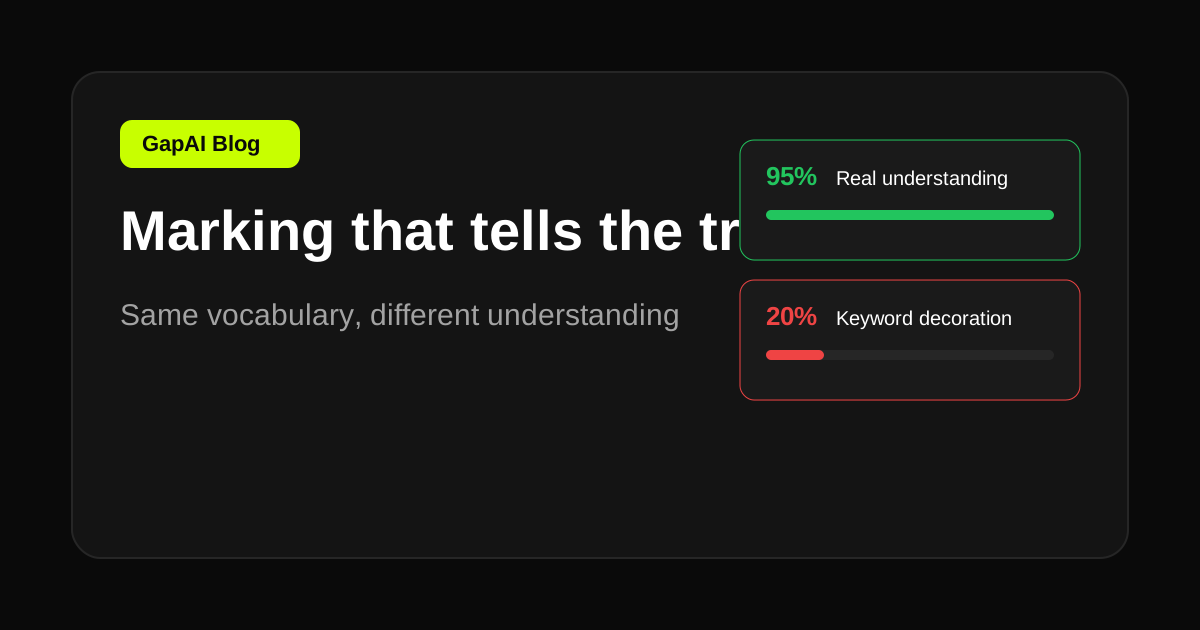
Some rules are enforced in code, not just asked of the AI. If an answer's central claim contradicts your source material, the score is hard-capped low, regardless of how much correct vocabulary surrounds it. Keyword decoration around a wrong claim earns nothing.
The reverse protection exists too. If nothing required is missing from your answer, the system will not let the score sit at a lazy 85. And feedback is checked against your own words, so it cannot ask you to add a point you already made.
What this feels like as a student
Honest marking stings for the first session. Scores start lower than the apps you are used to, and the feedback names real gaps instead of cheering. Then something more useful happens: when the score rises, you believe it.
That is the trade GapAI makes deliberately. The point of practice is not to feel ready. It is to be ready, and to know the difference before the exam finds out for you.