
Proof of Work for Students: Why Grades Are No Longer Enough
Grades show what students studied. Proof of work helps students show what they can do, how they think, and where they are growing.
Key ideas
Grades are not the full story
Grades can show academic performance, but they do not always show the work behind the grade. They rarely explain how a student approached a problem, handled feedback, made decisions, used tools, or improved over time.
That is why students often feel stuck when applications ask for experience. They may have studied relevant topics, but they do not have enough visible proof of practical ability.
What proof of work means for students
Proof of work is evidence that a student has practised a skill and produced something useful. It does not need to be exaggerated or presented as professional experience. It just needs to be clear.
A proof item could be a research brief, case response, product critique, annotated bibliography, coding project, design explanation, business report, AI-assisted study plan, or reflective portfolio entry.
Why this matters now
AI is changing how students learn and how work gets done. Coursera's 2026 AI in Higher Education reporting points to widespread AI use among students and educators, while employability research continues to show pressure around work readiness.
The important issue is not whether students use AI. It is whether they can use tools responsibly, think clearly, apply knowledge, and show evidence of growth.
The GapAI direction
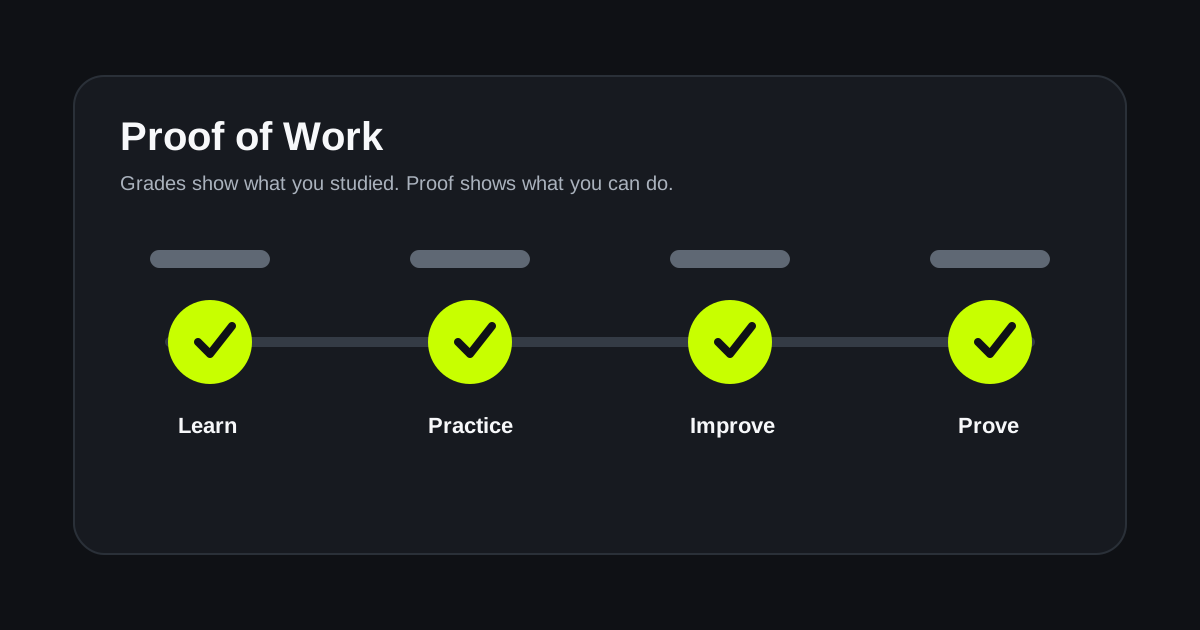
GapAI's direction is to help students move from private studying to visible progress. Learn the concept, practise through a task, improve with feedback, then save proof that can be reviewed later.
This is why proof of work sits close to the centre of the product vision. It connects studying, AI support, assignments, Skills Lab tasks, portfolios, and future opportunities.