
How to Build a Student Portfolio Before Graduation
A practical guide for students who want to turn coursework, research, projects, and AI-supported learning into portfolio-ready proof.
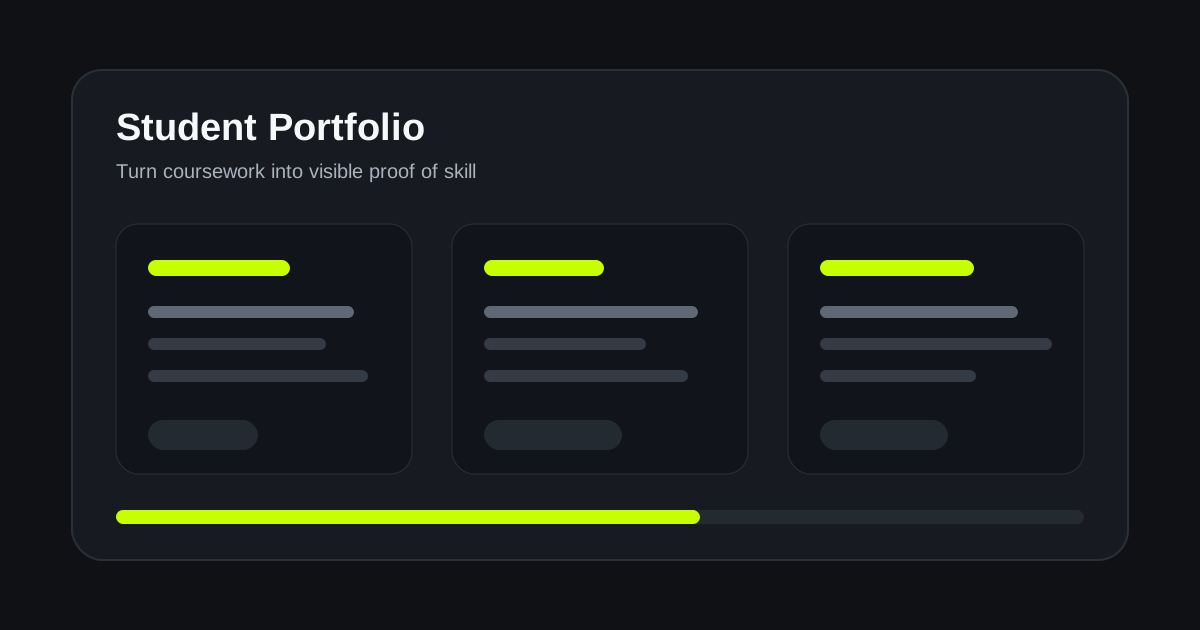
Key ideas
Why students need a portfolio earlier
Many students wait until final year to think about a portfolio. By then, they may have completed useful assignments, projects, presentations, and research tasks, but those outputs are scattered across folders, learning platforms, and old documents.
A portfolio helps turn that hidden work into visible evidence. It gives students a place to show what they can do, how they think, and how their skills are developing before they apply for internships, jobs, freelance work, or postgraduate opportunities.
What belongs in a student portfolio
A student portfolio can include more than polished professional work. It can include research briefs, case studies, essays rewritten as insight summaries, project plans, data analysis, design work, coding assignments, presentations, reflections, and practical tasks.
The key is to explain the skill behind the output. A market research report can show analysis. A group presentation can show communication and collaboration. A coding assignment can show problem solving. A research summary can show judgement and source handling.
The proof format
A simple portfolio entry should answer four questions: what problem did you work on, what did you do, what changed because of your work, and what skill does it show.
This matters because employers and opportunity providers often need clearer evidence than a course title. NACE's career readiness framework is useful here because it breaks employability into practical areas like communication, critical thinking, technology, teamwork, professionalism, and career management.
Where GapAI fits
GapAI is being built to help students organise work, practise useful tasks, improve outputs with AI support, and gradually turn learning into proof.
Future versions may help students keep project materials together, generate structured reflections, improve research summaries, and prepare portfolio-ready outputs from work they are already doing.