
The Learn, Practice, Prove Method for Students
A practical method for students who want to turn study time into skill growth, visible progress, and proof before graduation.
Key ideas
Why the old study loop is limited
Many students get stuck in a loop of reading, highlighting, summarising, and hoping it will be enough. That can help with memory, but it does not always build practical confidence.
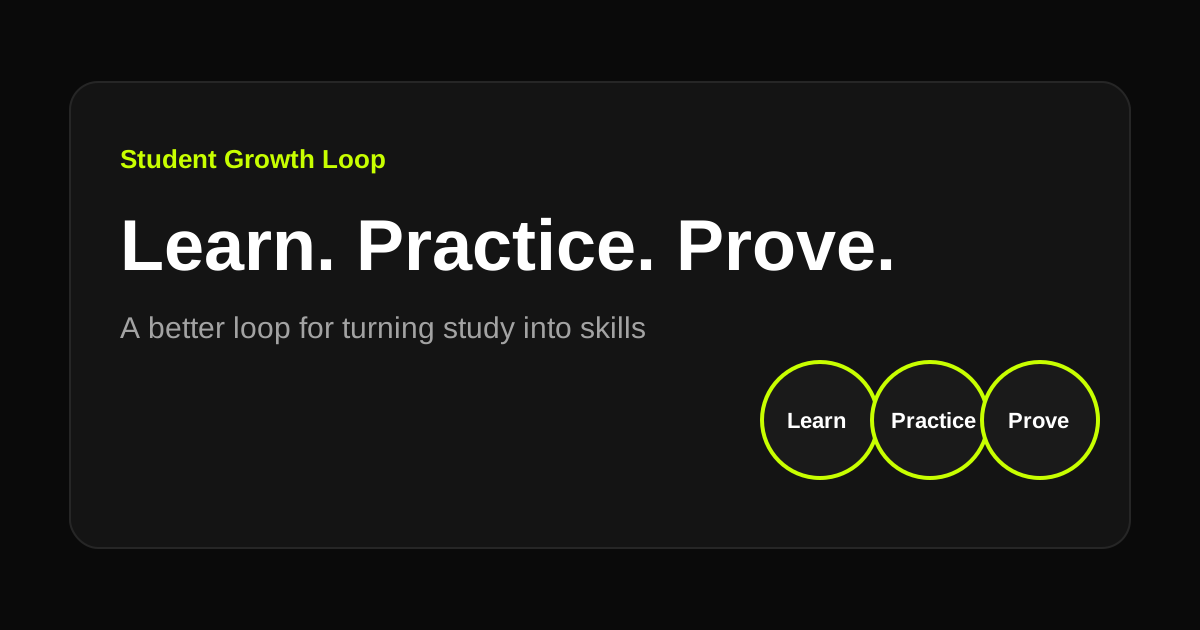
A stronger loop is learn, practice, prove. Learn the concept, practise applying it, then produce something that shows progress.
Step 1: Learn
Learning is where AI can be extremely helpful. It can explain a concept in different ways, simplify difficult material, create examples, and help students understand gaps in their knowledge.
But learning should not stop at explanation. If the student cannot apply the idea, the knowledge is still fragile.
Step 2: Practice
Practice is where students move from understanding to doing. That could be a case response, a research brief, a mock client task, a data interpretation exercise, or a structured writing challenge.
This is where GapAI's future Skills Lab direction becomes important: task simulations and applied exercises can help students build confidence before real opportunities arrive.
Step 3: Prove
Proof is the missing layer in many student tools. A student should be able to look back and see what they completed, what skills they developed, and what outputs they could use in a portfolio or application.
That proof does not need to be exaggerated. It just needs to be clear, honest, and useful.
Examples of Learn, Practice, Prove
A student learning market research could practise by analysing a small company, then prove the skill with a mini market report. A student learning Python could practise by building a data cleaning script, then prove it with a clear GitHub project.
A student learning UX design could practise by reviewing an app flow, then prove it with a simple UX case study. A student learning academic writing could practise by rewriting a weak report, then prove it with a before-and-after writing sample.
Why this should become a habit
The method works best when it becomes a repeatable habit. Every subject, assignment, or project can be treated as a chance to learn something, practise it, and keep evidence of the progress.
That is the product direction behind GapAI: not just helping students study, but helping them turn learning into proof they can understand, improve, and eventually show.