
Practical Skills Employers Look For in Students and Graduates
Practical skills are not just software tools. They include judgement, communication, problem solving, and the ability to turn knowledge into useful work.
Key ideas
Practical does not mean basic
When students hear practical skills, they often think it means learning a specific tool. Tools matter, but practical skill is bigger than that.
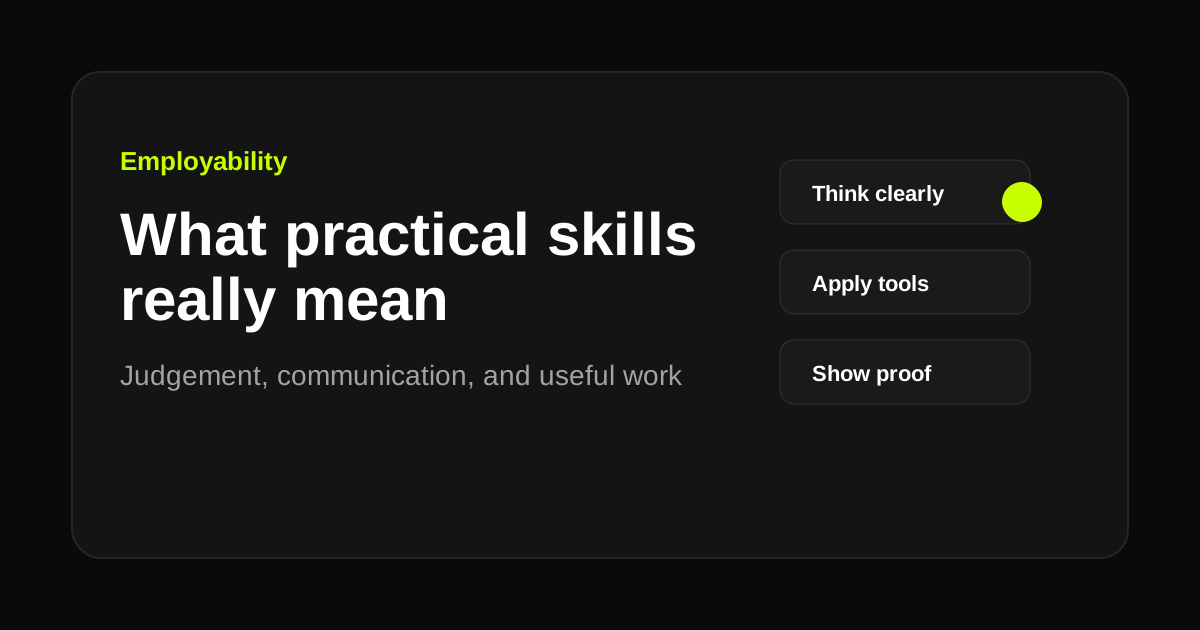
Practical skill means being able to understand a problem, decide what matters, use the right tools, communicate clearly, and produce something useful.
The skills employers keep signalling
The World Economic Forum highlights analytical thinking as a top core skill, while AI and big data, technological literacy, creative thinking, resilience, and agility continue to rise in importance.
Career readiness frameworks also put emphasis on communication, critical thinking, professionalism, teamwork, leadership, technology, and career management.
Cengage's employability research is also useful because it looks directly at the gap between education and work readiness from the learner and employer side.
Together, these sources matter because they translate broad employability into clearer skill categories students can intentionally practise.
How students can start before graduation
Students do not need to wait for a perfect internship to start building practical evidence. A research brief, case study, project plan, product critique, user interview summary, or data story can all become useful proof.
The important part is that the work is structured, reflective, and connected to a skill the student wants to build.
Skills students can prove
Communication can be shown through a clear presentation, report, or project explanation. Problem solving can be shown through a case response or technical build. Research can be shown through a brief with sources and judgement.
Critical thinking can be shown by comparing options and explaining tradeoffs. AI literacy can be shown by using AI responsibly, checking outputs, and documenting decisions. Teamwork can be shown through role clarity, contribution notes, and project outcomes.
The GapAI direction
GapAI is being built around that direction: helping students learn, practise, and create evidence of progress. The goal is not to replace university work, but to help students connect learning to future opportunities more clearly.